
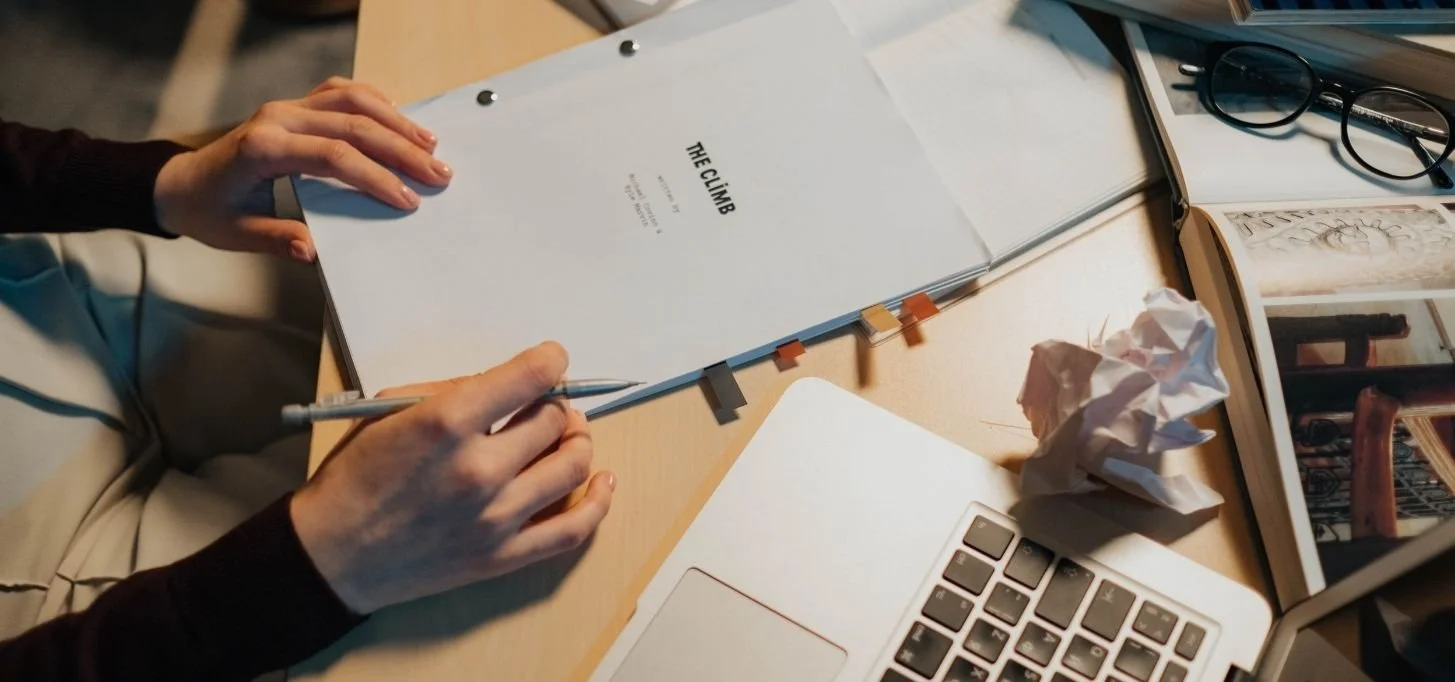
Editing fiction books
Your story is yours. Editing should help it become the best version of itself.
A fiction editor helps writers turn a rough draft into a book readers don’t want to put down
A good fiction editor isn't there to flatten your voice, rewrite your characters or turn your strange little book into something more commercially convenient.
Fiction book editors look at the things that make a novel work: structure, character, pacing, tension, voice, worldbuilding and the small details that make a reader keep turning the page.
Writing a book? Start here.
Before you hire an editor, ask yourself these questions
Does the story work from beginning to end?
Can you explain what changes for your protagonist? Does the ending feel earned? Are there chapters that exist mainly because you needed them to get somewhere else?
Does the pacing match the story?
Not every book needs to move quickly. A literary fantasy can take its time. A thriller probably can't. Look at where tension rises, where it drops and whether the slower sections are doing enough work.
Are your characters driving the story?
Characters don't have to be likeable. They do need to be interesting. Look at what each major character wants, what stands in their way and how their choices affect what happens next.
Does your worldbuilding support the story?
You might know everything about your fictional world. Your reader doesn't need to. Look for places where explanation has replaced discovery — and places where the reader needs more information to understand what's happening.
Does the book sound like you?
Editing shouldn't sand away everything unusual about your writing. Your voice is part of the book. The goal is to make it clearer, stronger and more intentional without making it sound like somebody else's novel.
If you're answering not quite to several of these, that's where editing can help.
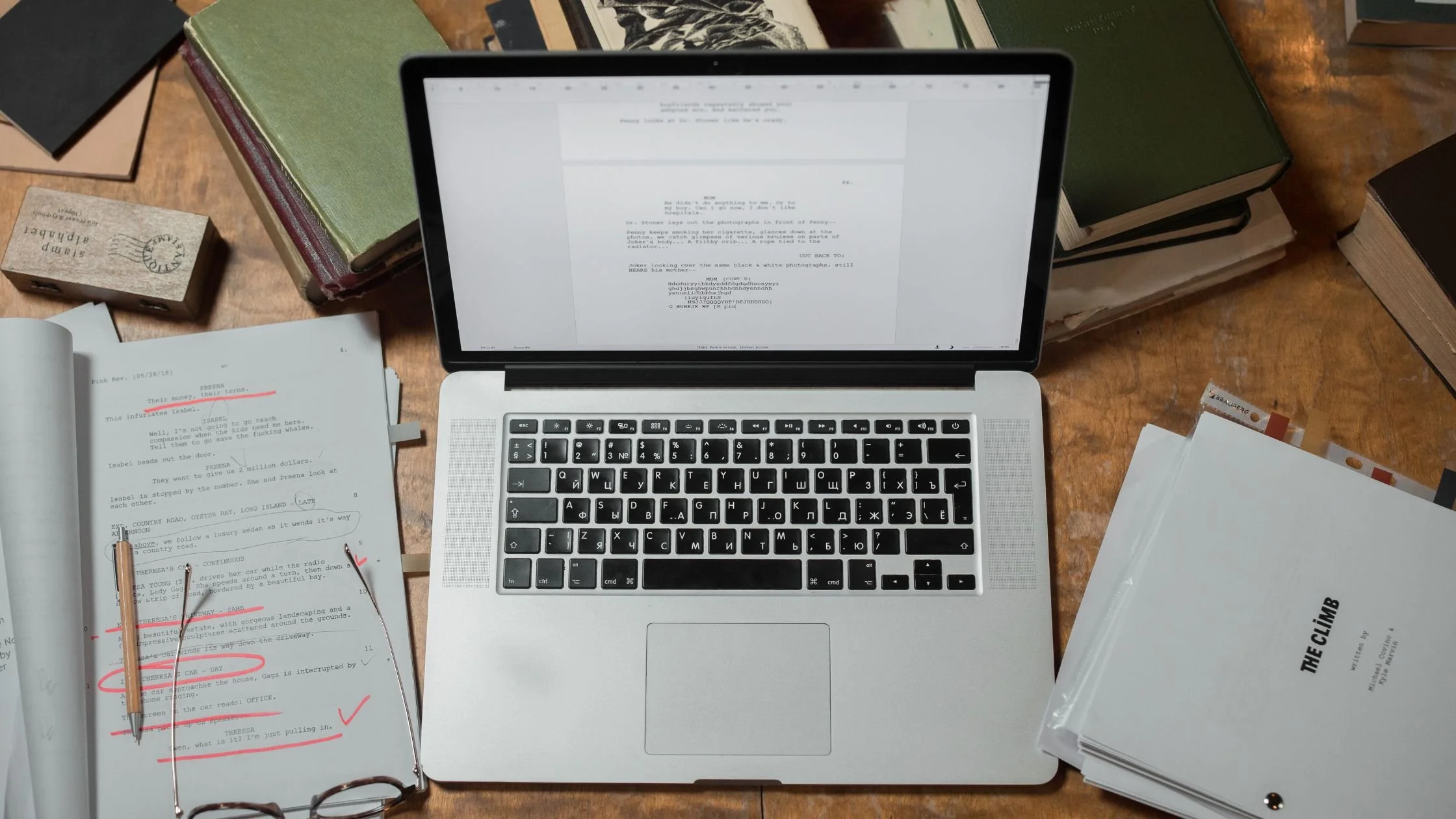
What kind of editing does your fiction need?
Developmental editing
Developmental editing looks at the book as a whole.
We look at structure, character arcs, pacing, plot, tension, point of view, worldbuilding and the relationship between all the moving parts.
This is where we ask the slightly uncomfortable questions.
Why does this character make that decision?
Why does this chapter exist?
Why does the ending feel rushed?
Why did I stop caring about this subplot?
We're deeply genre-literate editors who will cheer for your morally grey characters, push your pacing until it's genuinely unputdownable and tell you when the magic system has a hole in it.
Manuscript review
Not ready for a full developmental edit?
A manuscript review is a more focused way to find out what is and isn't working.
You'll get an editorial assessment of your manuscript, including its strengths, weaknesses and the areas that would benefit most from revision.
It's a good option if you know something isn't quite there yet, but aren't sure what.
Line editing, copyediting and proofreading
Once the bigger story is working, we can work at sentence level.
Line editing looks at how your writing reads: clarity, rhythm, voice, repetition, awkward phrasing and the places where a sentence could work harder.
Copyediting focuses on correctness and consistency.
Proofreading is the final check before publication.
You may need one, two or all three. We'll tell you what makes sense for your manuscript rather than automatically recommending everything.
Fiction is our thing
We particularly love working with books that live somewhere a little darker, stranger or more atmospheric.
Dark fantasy
Dark academia
Fantasy
Romantasy
Dark romance
Sci-fi
Dystopian fiction
Thrillers
Horror
Weird girl lit
Genre-bending fiction
If your book doesn't fit neatly into one of these, that doesn't mean it's a problem. Quite the opposite.
Some of the most interesting books are the ones that make us argue about which shelf they belong on.
Why work with Fae Media?
Fae Media provides fiction editing for writers working across fantasy, dark academia, dark fantasy, romantasy, sci-fi, horror, thrillers, weird girl lit and books that refuse to sit neatly in one genre.
We understand why readers love sprawling worlds, unreliable narrators, morally questionable protagonists, haunted houses, complicated women and books where something is probably lurking in the woods.
You also want someone who will tell you the truth.
A good editorial relationship isn't about being told that everything is wonderful. It's about knowing what is already working, understanding what isn't and having a clear path towards making the manuscript stronger.
We won't rewrite your book for you.
We will help you understand it.

How we work
1. We look at the manuscript
Send us your manuscript, or tell us about the project if you're still working on it. We'll take an initial look to determine whether we're the right fit and what kind of editorial support would be most useful.
2. We talk about the book
We'll discuss the manuscript, what you're trying to achieve and where you think you need help. This is also your opportunity to decide whether we're the right editor for you.
3. You receive a proposal
We'll put together a proposal outlining the recommended work, what's included, the estimated timeline and the cost. No mysterious editing package with 47 things you didn't ask for.
4. We get to work
Once the scope of work is agreed and the deposit has been paid, we start editing. You'll receive your manuscript and editorial feedback according to the agreed schedule, with the opportunity to discuss the work as we go.
You don't have to know what you need yet
That's part of the reason editors exist. If you've finished a manuscript and have absolutely no idea whether you need developmental editing, a manuscript review, copyediting or someone to simply tell you that Chapter 17 is doing something weird, get in touch.

Book editing services
We offer a range of services to meet the needs of every client. Have something else in mind?
Get in contact for a custom quote.
-
At Fae media we are deeply genre-literate editors who will cheer for
your morally grey characters, push your pacing until it's genuinely
unputdownable, and tell you when the magic system has a hole in it.Fae media might be a good fit if:
You're writing fantasy, romantasy, dark
romance, dark academia, sci-fi, or dystopian
fictionYou want an editor who reads your genre for
pleasure, not just professionallyYou need honest structural feedback — not
just encouragementYou're ready to make your manuscript the best
version of itself
-
If you’re not ready for a full developmental edit and want a shorter, manuscript review we offer a service for this. A manuscript review will help you to get your duck’s in a row and tell you where you can improve your manuscript.
-
We offer line editing, copyediting and proofreading of your books, and general overall editing.
-
We work with you to outline your non-fiction book to make sure it’s marketable, reflects your expertise and to help you write your book.
-
If you’re not sure where to start, we offer book guidance as a service to help you decide what to write about.
-
If you want to write a book, but don’t have the time or expertise, we offer ghostwriting as a service. You can share your notes, concept, subject expertise and book goal and we can turn it into a book for you.
Note: This is a limited service and only offered on a piece-by-piece arrangement.
Our process
Initial pass
We take an initial pass of your manuscript to determine feasibility and right fit.
Manuscript discussion
We send you a proposal for your manuscript that includes timelines, cost and proposed work.
Contract discussion
We send you a contract proposal that includes pricing, finalised work proposal and inclusions.
Work begins
After the contract of work is agreed upon, and a deposit paid, we get to work.
Fiction editing FAQs
Do I need to finish my manuscript before hiring an editor?
Not necessarily. If you're still writing, book guidance or developmental support can sometimes be useful before the manuscript is finished. If you're looking for a full manuscript edit, however, it's usually best to have a complete draft so we can assess the story as a whole.Should I edit my manuscript before sending it to an editor?
Yes — but don't spend six months trying to make it perfect first.
A good self-edit can resolve obvious problems and make the editorial process more useful. It also gives you a chance to identify the areas you're already worried about.
Your editor is there partly because you can't see everything in your own manuscript.What's the difference between developmental editing and copyediting?
Developmental editing looks at the book as a story: structure, character, pacing, plot, tension, point of view and overall coherence.
Copyediting works at sentence and word level, checking grammar, punctuation, consistency and correctness.
In most cases, developmental work should happen first.How do I know if my manuscript needs developmental editing?
If you're worried about pacing, structure, character arcs, plot holes, point of view, the ending or whether the story actually works as a whole, developmental editing is probably where to start.
If you're mostly happy with the story but know the prose needs polishing, you may need line editing or copyediting instead.
Can an editor change my writing style?
An editor shouldn't replace your voice with theirs.
The aim is to make your writing clearer and stronger while preserving the qualities that make it yours. That can mean challenging habits that are getting in the way of your voice, but it shouldn't mean turning your manuscript into generic “good writing”.
Can you edit fantasy and genre-bending fiction?
Absolutely.
Genre conventions matter because readers bring expectations with them. At the same time, you don't have to follow every convention.
We'll look at what your particular book is trying to do, where it sits within its genre and whether the choices you're making are working for the story.
Can I self-publish after working with an editor?
Yes.
Editing is useful whether you're planning to query agents, submit to publishers or self-publish. A professionally edited manuscript gives you a stronger foundation whichever publishing route you choose.
Do I need a literary agent?
If you're pursuing traditional publishing, you'll generally need to work with a literary agent, although there are exceptions.
If you're self-publishing, you don't need an agent.
The right route depends on the book, your goals and how you want to approach publishing.
How long does fiction editing take?
It depends on the length and condition of the manuscript, the type of editing required and the scope of the project.
We'll give you an estimated timeline as part of your proposal rather than making you guess.
Have a manuscript hiding in a drawer?
Or sitting open in a document you've been avoiding for the last three months?
Let's talk about it.
Tell us what you're writing, where you are in the process and what you think you need help with.
If you're not sure what you need, that's fine too.
Contact us.
Fill out the form to get in contact with us.
Tell us as much about your project as you can to help us find the best way to help you.
If you are interested in our hybrid book publishing option, let us know in the comment section of the form.