User generated content for indie authors
What is UGC and how to work with it as an indie author
This guide covers what UGC actually is, how it works as a discovery mechanism, how to get more of it without feeling like you're begging, where to focus your energy by channel and what to do first.
What is user generated content in publishing?
User generated content, or UGC, is any content about your book created by someone other than you: readers, reviewers, bookstagrammers, BookTokers, podcasters or fans. It's shared without being commissioned or paid for, which sets it apart from sponsored content or paid influencer posts, though the line between the two has blurred as platforms formalize creator partnerships.
For authors, UGC typically looks like:
A TikTok video of someone crying, screaming or annotating your book
An Instagram photo of your cover styled with candles, tea or a themed outfit
A Goodreads or StoryGraph review, especially one with a line worth screenshotting
Reddit or Discord threads discussing your plot, characters or a specific twist
Fan art, fan casting or aesthetic mood boards
Amazon or retailer reviews
Reading vlogs or wrap-up videos that mention your book
Bookshelf tours or reader roundups that feature your title
The defining feature is authorship. It comes from the reader, not the author or publisher, and that's exactly why it works. Readers trust other readers more than they trust marketing copy.
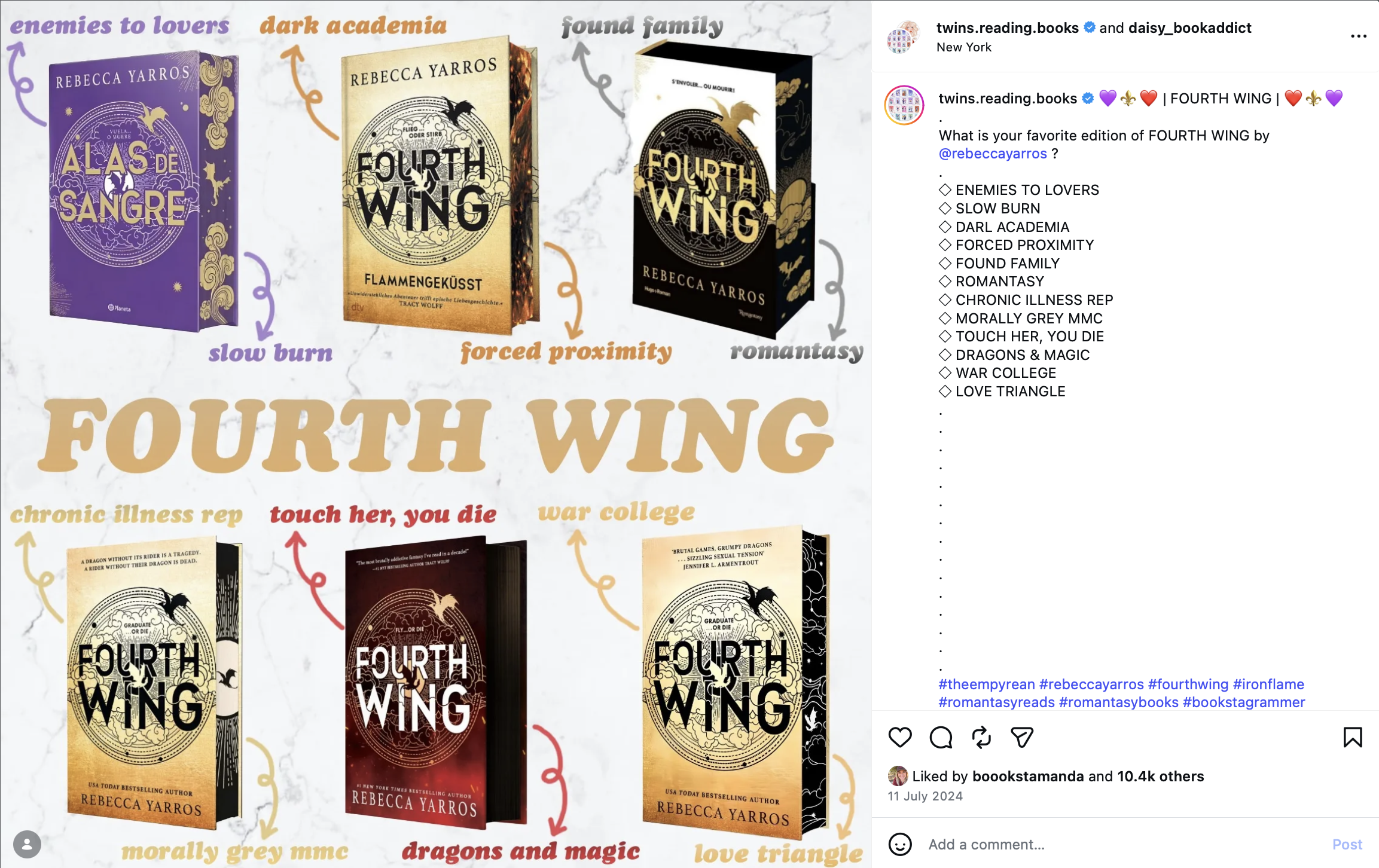
Examples of UGC for Fourth Wing by Rebecca Yarros. Source: https://www.instagram.com/twins.reading.books/
How does user generated content work for book discovery?
It helps to think of UGC as a three-part loop rather than a single event.
1. UGC works as social proof, not advertising
When a stranger sees a book mentioned once in an ad, that's a claim. When they see it mentioned by five different readers across three platforms in their own words, that's evidence. UGC compresses the trust-building process that used to take years of brand-building into a single scroll session, because the audience is evaluating peer behavior, not marketing intent.
2. UGC feeds platform recommendation algorithms
Platforms including TikTok, Instagram and Amazon don't just show content. They reward engagement signals such as comments, saves, shares, watch time and click-through by showing that content to more people. A single enthusiastic UGC post that gains traction can outperform a paid ad, because the algorithm reads organic engagement as a quality signal and distributes it further for free. This is the mechanism behind BookTok: a handful of viral reader videos can move tens of thousands of physical copies through algorithmic amplification alone.
3. UGC compounds over time
Unlike a paid ad campaign, which stops the moment the budget runs out, UGC keeps existing. A review from 2023 can still surface new readers in 2026. Each new piece of UGC also makes the next one more likely, because new readers see existing UGC, join the conversation and create their own. This is why the first 10 pieces of real UGC are consistently harder to get than the next 100.
How to get and encourage UGC as an author
You can't force UGC, but you can build the conditions that make it more likely. The tactics fall into four categories.
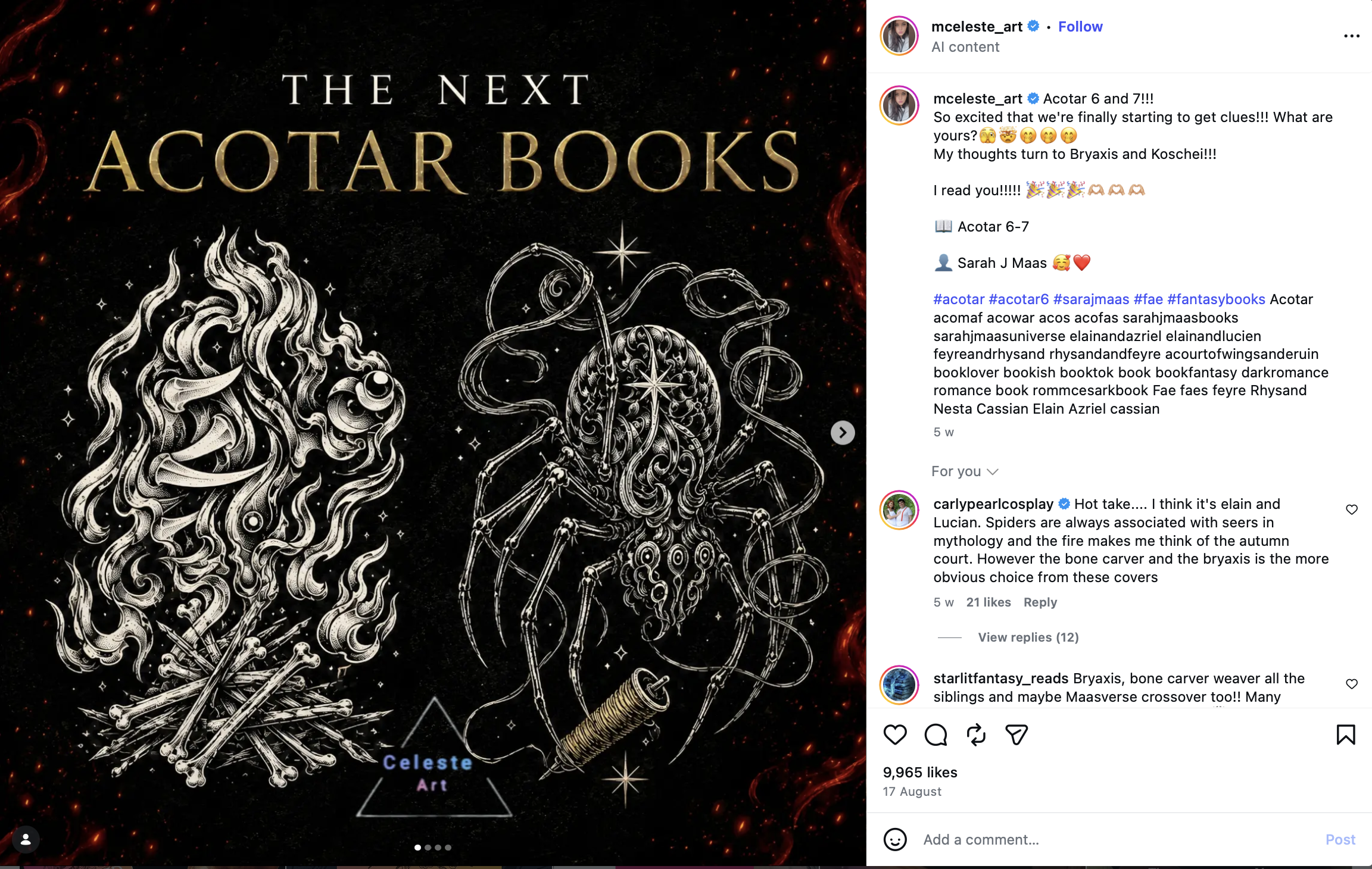
Example of shareable imagery for the next ACOTAR books by Sarah J Maas. Source: https://www.instagram.com/mceleste_art/
Make your book more shareable
Some content is more UGC-bait than others by design, without compromising the story.
Give readers a moment worth screenshotting. A quotable line, a devastating chapter ending or a plot twist readers will want to react to without spoiling it are the raw material of UGC. Identify three to five shareable moments per book during revision.
Design a cover and aesthetic that photographs well. Bookstagram and BookTok are visual mediums, and a cover with strong color, texture or a distinct mood, which plays directly to gothic and dark fantasy aesthetics, gets styled and photographed far more than a generic one.
Create discussion-worthy ambiguity. Books that leave room for reader theories, fan casting or genuine debate about what happened generate more organic conversation than books that resolve everything neatly.
Ask for UGC without adding friction
Most readers don't post about books because it doesn't occur to them, not because they don't want to. A specific, easy ask converts far better than a generic one.
Add a short note at the end of the book that explains what a review means to you rather than issuing a blunt request for one.
Include a QR code or short link to a review page in the back matter or on your website.
On social media, ask a specific, low-effort question, such as which character readers would want as a best friend, rather than asking directly for a review.
Time the ask for right after an emotional high point, such as the final page, right after a plot twist post or right after a live reading event, when motivation is highest.
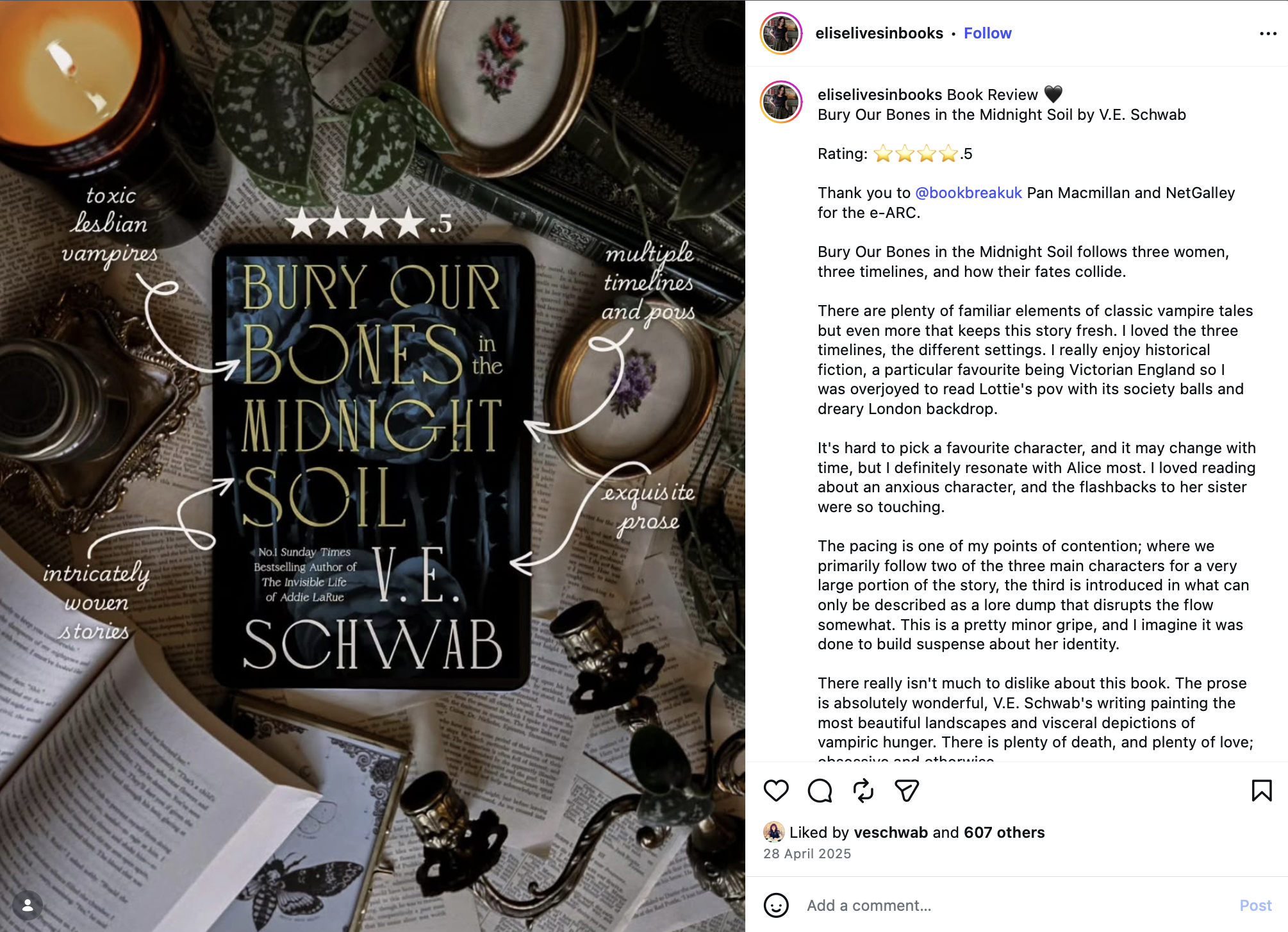
Example of UGC content for Bury my bones under the midnight soil by V.E Schwab. Source: https://www.instagram.com/eliselivesinbooks/
Give readers a reason and a template
Structured invitations outperform open-ended ones because they remove the hesitation of not knowing what to post.
ARC and street teams. A small group of advance readers who get early access in exchange for an honest review and a social post around launch week is still one of the highest-ROI UGC tactics available to indie authors. Keep the ask specific, such as one review and one post, and keep the group small enough to manage personally.
Branded hashtags and prompts. A hashtag tied to your book or series, or a simple prompt asking readers to tag you in their annotated pages, gives fans a template to follow instead of a blank page.
Launch-week challenges. A photo challenge, a themed playlist request or a prediction post asking readers to guess the ending creates a concentrated burst of activity that platform algorithms tend to reward.
Book club and discussion guides. Providing discussion questions makes it easy for readers to host their own conversations, which often spill into social posts and reviews.
Reward and share the UGC you already have
Encouraging more UGC is often less about asking for new content and more about making existing creators feel seen.
Reshare fan content, with credit and permission, to your own audience. This is the single most effective way to encourage more of it, since creators repost more once they know the author is watching.
Reply to reviews, comments and tags personally, even briefly. Authors who engage get tagged again.
Send a genuine thank you to reviewers or creators who put in real effort, without asking for anything else in return. This is relationship-building, not a transaction.
Feature standout fan content, such as fan art or favorite reader quotes, in your newsletter or on your website, with credit.
A practical UGC plan for authors
If you're starting from zero, don't run every tactic at once. Work through this sequence instead:
Audit existing mentions of your book across Goodreads, TikTok, Instagram and Amazon before creating anything new. You likely have more UGC already than you realize.
Identify three to five shareable moments in your book, such as key lines, twists or images readers are likely to screenshot or quote.
Add one low-friction review request to material you already have, such as your back matter, website or newsletter.
Run a small ARC or street team for your next launch. Even 10 to 15 engaged readers can generate a meaningful early wave of content.
Choose one primary UGC channel based on where your genre's readers already spend time, and commit to it for 90 days before adding a second.
Build a weekly habit of finding, crediting and sharing fan content, so encouragement becomes routine rather than an afterthought.
Track which posts, chapters or campaigns generate UGC, not just which ones generate sales, and do more of what works.
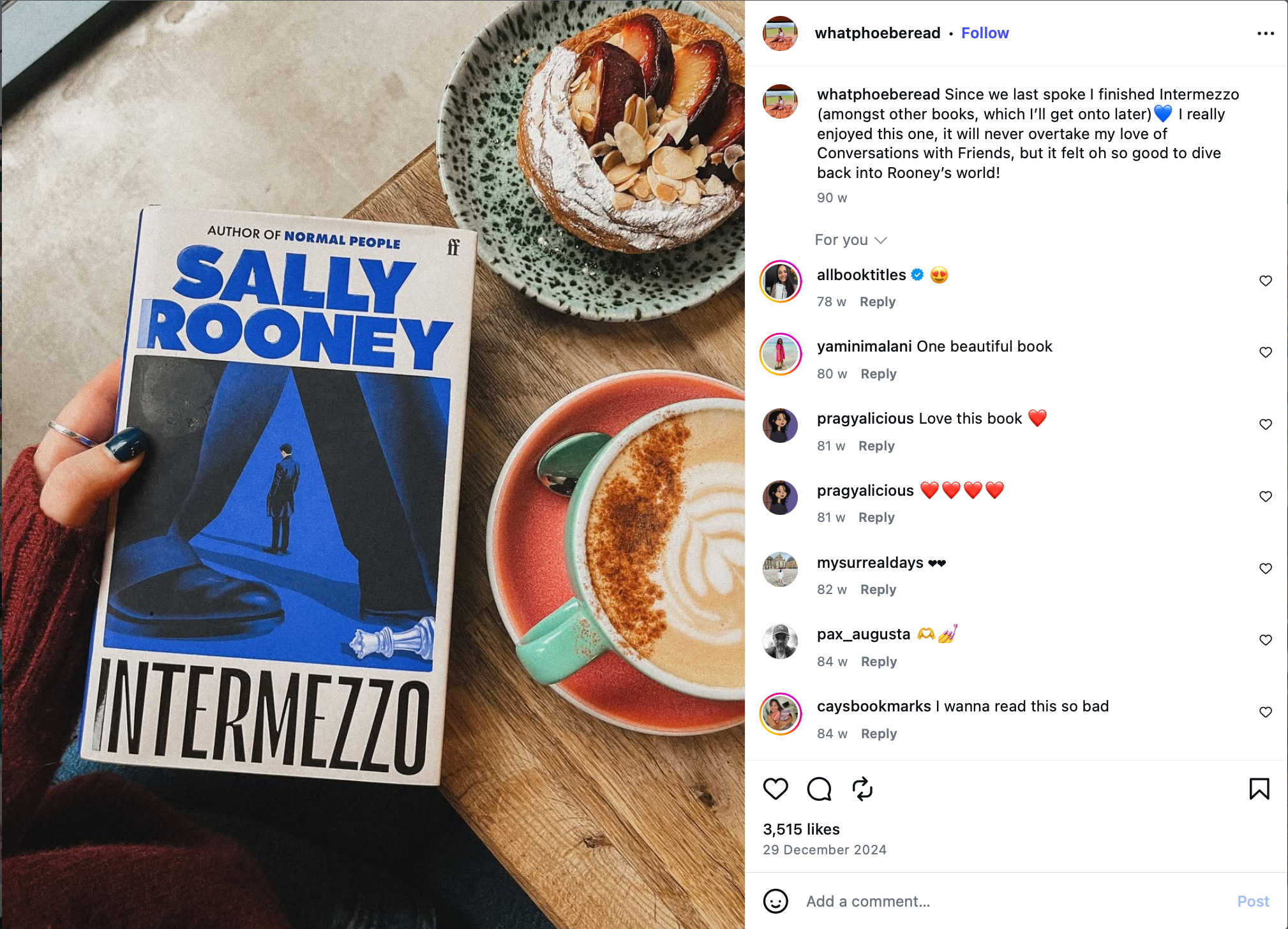
Example of UGC for Intermezzo by Sally Rooney. Source: https://www.instagram.com/whatphoeberead/
Best channels for book UGC by platform
Not every platform produces UGC at the same rate or in the same form. Matching your effort to the right channel for your genre matters more than trying to be everywhere.
Comparison of book UGC channels by platform
| Channel | UGC form | Best fit |
|---|---|---|
| TikTok, or BookTok | Reaction videos, emotional reading reactions, annotated-page videos, aesthetic edits | Strong emotional hooks, YA, romance, romantasy, dark and gothic fantasy |
| Instagram, or Bookstagram | Styled photography, cover flat-lays, Reels, quote graphics | Visually distinct covers, aesthetic-driven genres |
| Goodreads and StoryGraph | Written reviews, shelf additions, buddy-read threads | Every genre. This is foundational review infrastructure |
| Mood boards, aesthetic pins, quote graphics | Aesthetic-first genres such as fantasy and romance, with a long content lifespan | |
| Amazon and retailer reviews | Star ratings, written reviews | Every genre. Directly affects discoverability algorithms and buyer trust |
| Reddit, genre subreddits | Discussion threads, recommendation lists, theory posts | Genre fiction with strong lore or discussion potential, such as fantasy and sci-fi |
| Discord, reader servers | Ongoing discussion, fan theories, community-generated art | Series with an engaged core fanbase. Harder to scale, but high loyalty |
| YouTube, or BookTube | Long-form reviews, wrap-ups, reading vlogs | Readers who want depth. Good for backlist discovery |
| Facebook groups | Reviews, recommendation-thread mentions | Older or genre-specific reader demographics, such as cozy mystery and historical fiction |
For most indie authors, the efficient approach is to get review infrastructure right everywhere, meaning Goodreads, Amazon and StoryGraph, then pick one or two content-creation channels that fit your genre's actual audience rather than chasing whichever platform is trending.
FAQs about UGC for authors
Do I need to pay for UGC to happen?
No. That's the defining difference between UGC and influencer marketing. Paying someone to post makes it sponsored content, which most platforms require to be disclosed, and readers weight it differently, though it can still work as a complementary strategy.
How much UGC is normal for a new indie release?
There's no universal benchmark. It varies by genre, existing audience size and launch strategy. A more useful measure than volume is trend: is UGC increasing in the weeks after launch, plateauing, or nonexistent? Increasing UGC after the initial launch spike usually signals the book is finding readers organically.
Should I ever ask a reader to change or remove a negative post?
No. Trying to influence or suppress organic reviews, positive or negative, damages an author's reputation far more than the review itself, and it can violate platform terms of service. Engage professionally with critical feedback if you engage at all, and never argue with a reviewer publicly.
Is it okay to repost fan content without asking?
Always ask first, or use built-in platform sharing features, such as Instagram's share-to-story option with credit, that make attribution automatic. A quick message asking permission takes 30 seconds and avoids damaging trust with the exact readers you want more content from.
What if I have a small following? Is UGC even realistic?
Yes, and arguably more so. Small, engaged communities, such as a strong ARC team, an active Discord or a tight-knit newsletter list, often produce more meaningful UGC per capita than large passive followings, because the relationship is closer and the ask feels personal rather than transactional.
How long does it take for UGC to start happening organically?
It's rarely immediate. Most authors see the first organic wave around launch week if an ARC team is in place, with a slower second wave building over the following months as reviews accumulate and algorithms pick up on engagement signals. Backlist titles can still generate fresh UGC years after release if the book keeps finding new readers.
Does UGC actually translate to sales?
There's strong anecdotal and industry evidence, particularly from BookTok-driven bestsellers, that UGC significantly influences purchase decisions, since peer recommendation carries more trust than advertising. It's best treated as a discovery and trust-building mechanism that supports sales rather than a metric to optimize in isolation.