Do you need a literary agent? If you want a deal with a major publisher, yes. Most big houses only read agented submissions, and an agent gets your book in front of the right editors, negotiates your contract and sells your rights around the world. If you'd rather self-publish or submit to small presses, you can skip the agent. This guide covers what agents do, how to find one, how to spot scams and when going without makes sense.
Key takeaways
Big publishers want agents
Most major houses only accept agented submissions, so an agent is your way in.
Agents are paid on commission
The standard is 15 percent of domestic sales and around 20 percent on foreign and film deals, never up-front fees.
Agents sell rights worldwide
UK, North American, translation, audio and screen rights are separate deals, and agents run them.
Finding one takes research
Use book acknowledgements, QueryTracker, Publishers Marketplace and Manuscript Wish List, and track every query.
You can go without
Small presses, self-publishing and acting as your own agent are real options, each with trade-offs.
Manage your career
A good agent thinks beyond book one, from the next project to the next contract.

Before you query an agent, get the manuscript into the strongest shape you can. Editing matters. I'll say it again: editing.
Editing is one of the most valuable stages of preparing a manuscript for submission. A thoughtful editorial process can help you strengthen the structure, clarify character motivations, resolve plot problems and catch continuity errors before an agent or publisher sees the work. It cannot guarantee a bestseller, but it can help you submit a manuscript that is as strong as you can make it.
This is one area where a literary agent may help. Many agents offer editorial feedback and may ask for revisions before submitting a manuscript, although the amount of editorial support varies from agent to agent. An agent is not a substitute for a freelance editor, and reputable agents earn their income through commission on deals rather than charging authors an upfront editing fee. If you want an independent editorial assessment before querying, explore Fae Media's manuscript assessment and developmental editing services.
So what else does an agent do, and do you need one?

What does a literary agent do?
A literary agent is your representative in the publishing industry. They:
Know the right people
Agents have working relationships with editors at publishing houses, and they know which editor is hunting for which kind of book right now.
Send your submissions
They pitch your book to the right editors, so it skips the slush pile.
Sell your rights
Foreign translation, film and TV, and audio rights can earn more than the original deal.
Negotiate contracts
Advances, royalties, rights reversion, option clauses and audio and ebook terms are all negotiable, and agents do it daily.
Manage your career
A good agent thinks beyond book one, from the next project to the next contract.
Position your book
They shape how the book is pitched, which category it sits in and how it differs from what's already on the shelves.
Literary agents are generally paid by commission on income they negotiate or collect for you. A commonly quoted rate is 15 percent for domestic book deals, with higher rates sometimes applying to co-agented foreign-rights or other subsidiary-rights deals. The exact arrangement depends on the territory, rights and agency agreement. Be wary of anyone presenting themselves as an agent who asks for reading, representation or submission fees; check the relevant professional standards and contract before signing.
Why do publishers require a literary agent?
Many major trade publishers, particularly the largest houses and their imprints, do not accept unsolicited submissions from authors and expect submissions to come through literary agents. Agents help publishers manage the volume of manuscripts they receive and submit work they believe fits an editor's list. Policies vary by imprint, territory and genre, so always check the publisher's submission guidelines rather than assuming every large publisher has the same rule.

Who decides whether a publisher acquires your book?
In most cases, the people fielding book submissions at a publishing house are acquiring editors, also called commissioning editors. They read the submissions agents send in and decide what's worth pursuing. They're not the same as the freelance editor you hire to polish your manuscript. They work for the publisher, and their job is to find books the house can sell.
They can't green-light a deal alone, though. When an editor loves your book, they champion it internally and present it at an acquisitions meeting, where sales, marketing, the publisher and finance weigh in on whether it can sell enough copies to justify the advance. The team looks at where the book fits on the list, who will buy it and how it compares with similar titles.
So the editor is both the gatekeeper and your advocate, but the team makes the final call. A book can win over its editor and still be turned down at that table, which is why an agent's positioning matters so much before you submit.
Titles vary between publishers, but these are the ones you'll see most often.
Acquisitions editor
The classic title, mainly used in the US and at academic and smaller presses. Their job is finding and acquiring books.Commissioning editor
The UK equivalent of an acquisitions editor, and often the first person an agent pitches to.Senior editor
An experienced editor who acquires books and takes them through editing. They usually have the most day-to-day power to champion a submission.Executive editor
A more senior role, usually with a bigger acquisitions budget and a stronger voice in the meeting.Editorial director
Oversees the editorial team and a section of the list, and often has sign-off on offers.Editor-in-chief
Common in the US, where it's a senior role over an imprint's or house's editorial direction. At smaller presses, this person may make the final call alone.Publisher or publishing director
Heads an imprint or house and usually approves the biggest decisions, including how much to offer.Associate or assistant editor
Junior editors. They often read submissions and flag the promising ones, but they usually need a senior editor to take a book forward.Editorial assistant
Entry level. They may help with reading, but they don't acquire books.
An agent will generally submit to editors whose lists and commissioning interests fit the book. Seniority can matter, but titles and decision-making authority vary between publishers; at smaller presses, an editor or publisher may make the acquisition decision directly.
It works the other way too. Publishers trust agents to know the market, to send them books that fit their list and to handle the contract side without drama.
There are exceptions. Many small and independent presses, university presses and digital-first imprints take submissions directly from authors, so an agent isn't the only door in. But if you want a Big Five deal, you need one.

What does a literary agent do before submitting your book?
By the time a publisher sees your manuscript, the agent has already put in weeks or months of work. That usually includes:
Editorial rounds
Many agents work with you on one or more revisions until the book is ready to go out.
Pitch and positioning
They write the pitch letter, decide which comparable titles to cite and settle on how to describe the book in a sentence.
Building the submission list
They pick the editors and imprints most likely to say yes, rather than blasting the manuscript at everyone.
Timing
They choose when to go out, because autumn and spring lists and industry events affect how fast editors respond.
Only then does the book go out on submission. Then comes the waiting, the feedback and sometimes a round of rejections the agent has to help you read and respond to.
Do publishers scout books online?
Yes, to a degree. Acquiring editors and scouts do browse the internet for books to publish. They read Wattpad, Archive of Our Own, Royal Road, Substack, Kindle bestseller lists and self-publishing charts, and some publishers hire dedicated scouts to do it.
If a publisher approaches you directly, it may still recommend that you appoint an agent to advise on the offer and negotiate the contract. Do not assume this is automatic, though: ask what representation is expected and consider getting independent publishing-law advice before agreeing to anything.
What do literary agents look for in a book?
Agents want a book they can sell, and an author they can build a career with. These are the signals that get attention:
A polished manuscript
Clean, professionally edited and in the right word count for its genre.Publishing credits
Published short stories, magazine placements, competition wins and anthology credits show you can write to a standard and finish things.Fan fiction and online serials
A big readership on fan fiction or serial platforms proves you can hold an audience (more below).Self-publishing traction
A self-published book with strong sales and reviews tells an agent the market has already said yes.Social presence
Especially for nonfiction, followers, a newsletter or a podcast show you can bring readers with you.Marketability
Does the book fit a clear category? Is there a readership for it? Agents think about comparable titles and where the book will sit in a shop.

Authors who built an audience before signing a book deal
These examples show how an existing readership can attract industry attention. They are notable success stories, not a typical or predictable route to a book deal.
Andy Weir, The Martian. After literary agents turned down his earlier work, Weir posted The Martian online one chapter at a time, for free, on his website¹. He later put it on Kindle at 99 cents, and it climbed the charts². An editor at Crown noticed, Weir said in a Goodreads Q&A, and mentioned it to a colleague who was a literary agent, David Fugate. Fugate became Weir's agent, Crown offered a book deal, and 20th Century Fox optioned the film rights the same week³. The book became a Ridley Scott film².
Hugh Howey, Wool. Howey self-published Wool as a short story on Kindle in 2011, then released more installments as readers asked for them⁴. He turned down offers from agents until one raised the prospect of Hollywood⁵. He also partnered with literary agent Kristin Nelson, who, according to a profile of Howey, walked away from six-figure offers and then seven-figure ones before landing a deal for Simon & Schuster to distribute the book to retailers across the U.S. and Canada⁶. The deal let Howey keep the right to sell the book online himself in those territories⁶. It's a textbook example of what an agent can do: get a deal that a first-time author wouldn't have known to ask for.
E. L. James, Fifty Shades of Grey. The trilogy began as Twilight fan fiction posted online, then was released as an ebook and print-on-demand paperback by a small Australian publisher, The Writers' Coffee Shop⁷. That publisher couldn't handle the distribution demands of a series this successful⁸. Adweek reported that Vintage Books won a bidding war for all three books, paying a reported seven-figure sum, and that literary agent Valerie Hoskins of VHA negotiated the deal⁷. Fan fiction can and does lead to book deals, and this one is a distribution story too.
Anna Todd, After. Todd wrote After on Wattpad, where it began as fan fiction inspired by the boy band One Direction and drew a huge readership.[9] Gallery Books, an imprint of Simon & Schuster, signed her to a reported six-figure deal, and Wattpad itself helped broker the sale⁹. Online platforms are also a place where editors go looking.
The pattern is the same each time. Readers showed up first, and the industry followed.

How can a literary agent help with international distribution?
Self-publishing lets you sell an ebook to readers in almost any country with a few clicks. Getting a physical book into bookshops abroad, translated and on shelves, is a different job entirely. That's where an agent earns their commission.
Why is international distribution so hard?
Publishing rights are sold by territory, and each territory is its own deal:
Print distribution
Getting physical copies to bookshops and readers in other countries takes warehouses, sales teams and relationships that most self-published authors don't have.Territorial rights
A publisher might buy UK and Commonwealth rights while another buys North American rights, and an agent splits and sells them to get the best fit in each market.Translation rights
Foreign publishers buy the right to translate and publish your book in their language, and agents usually sell these through contacts or sub-agents abroad.Audio and screen rights
These are sold separately too, and they can be worth more than the book itself.
Two recent romantasy hits show how this works in practice. Both started as self-published books, and both ended up with an agent-led, multi-publisher auction.

How Callie Hart's Quicksilver moved from self-publishing to traditional publishing
Callie Hart is a British author who had spent years self-publishing, with more than 40 dark romance books to her name. She wanted to write a fantasy, but her literary agent and the 8,000 members of her reader group were against the idea¹¹. After reading the first draft, the agent said the book needed significant cuts and reworking to be sellable. Hart believed in the story as written, so she declined the changes and self-published Quicksilver in June 2024¹¹.
Sales started slowly. According to Parade, Hart then sent free copies to around 30 BookTok creators with no strings attached. Within two months, TikTok posts about the book had passed 3 million views, and traditional publishers took notice.¹¹
That's where the rights work began. The rights went to auction with 10 bidders¹². Hodderscape won UK and Commonwealth rights (excluding Canada), bought from Suzannah Ball at WME. Forever, an imprint of Grand Central Publishing, took North American rights. The Bookseller reported that rights had already sold in 12 territories¹². The traditionally published edition came out Dec. 3, 2024, and reached No. 1 on The New York Times and Sunday Times bestseller lists. Netflix acquired the film rights the same month in a reported seven-figure deal¹³.
Hart's story shows two things. First, she proved demand herself, with her own marketing and no publisher. Second, once demand was proven, selling the rights across UK, North American and foreign territories, and running a competitive auction, was the kind of work an agent does best.
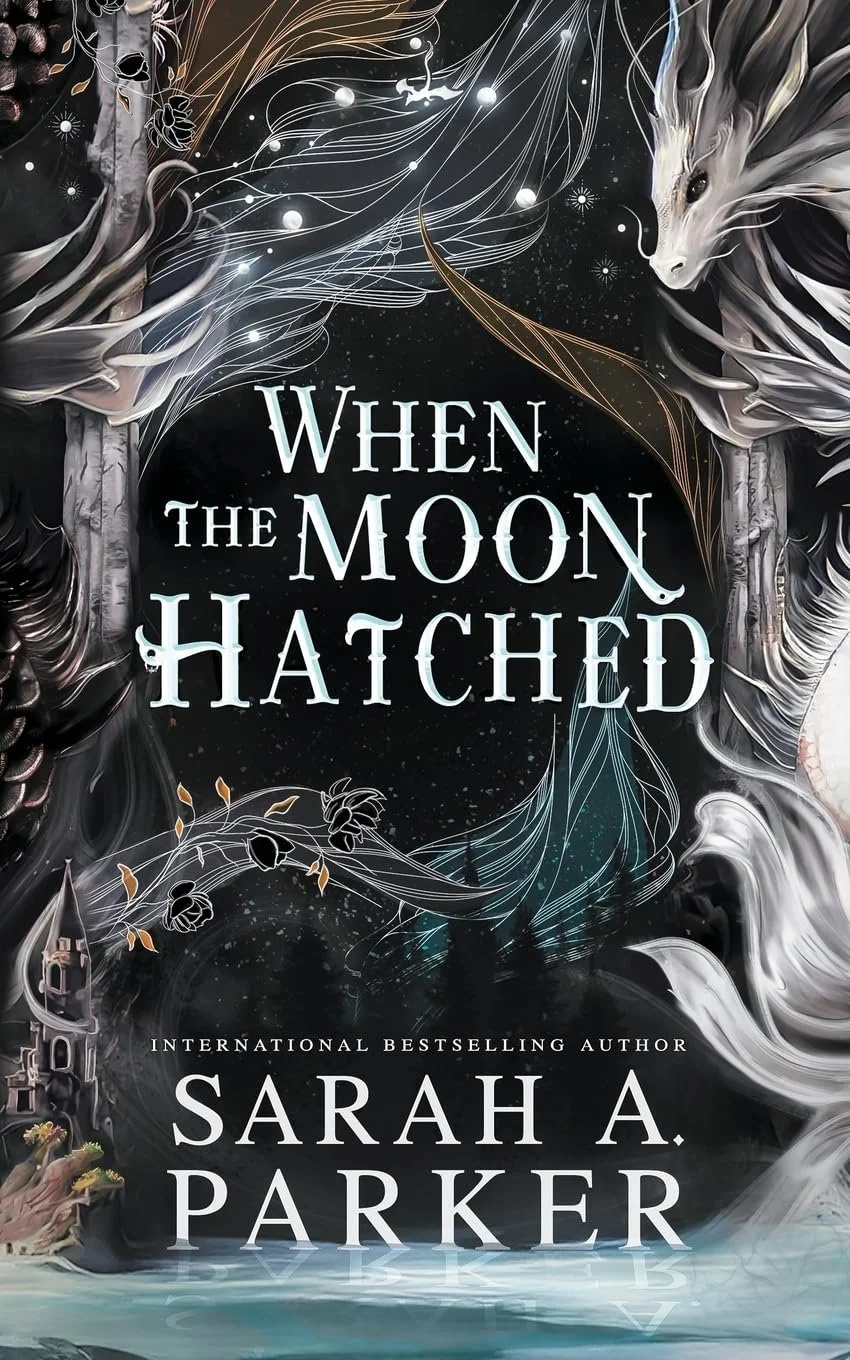
How Sarah A. Parker's When the Moon Hatched reached international publishers
Sarah A. Parker is a New Zealand-born author who lives in Australia and had been self-publishing since 2019¹⁴. She spent about three and a half years building the world of When the Moon Hatched¹⁵, then wrote the first draft, about 172,000 words, in six weeks¹⁶. She self-published it in early 2024¹⁷.
She was returning from a family holiday in Japan when her agent called to say the book had hit No. 1 on Amazon within a day of release. Her agent was soon flooded with emails from traditional publishers¹⁶. BookTok readers and other writers posting about the book fuelled the buzz¹⁶.
Parker's reason for going traditional is the clearest example of the distribution problem. She said she realised from the moment she published that the book was too big for her to manage alone. She had trouble getting it into a number of countries, so a large part of her readership couldn't buy a physical copy. She knew the story needed deep distribution channels she couldn't build on her own¹⁸.
The Bookseller reported that HarperVoyager won a nine-way auction for UK and Commonwealth rights (excluding Canada) in a two-book deal, bought from Suzannah Ball at WME, and that Avon, HarperCollins' US imprint, signed North American rights¹⁹. The UK hardback came out June 13, 2024, and plans to translate the book into more than a dozen languages followed¹⁴. Parker has said the support meant she could drop some of the many hats she'd been juggling and focus on the story¹⁵. The sequel, The Ballad of Falling Dragons, arrived in May 2026 and debuted at No. 1 on The New York Times list¹⁷.
What these self-publishing success stories can teach authors
Demand came first
Both authors proved readers wanted the book before any publisher got involved.Rights are split by territory
Each deal separated UK and Commonwealth rights from North American rights, with foreign translations sold on top.Auctions raise the stakes
With nine and 10 publishers bidding, the authors had leverage that a lone author with one offer wouldn't have.Authors still do the marketing
Hart's BookTok outreach and Parker's community built the audience, and an agent can't manufacture that.Viral success is rare
These are standout cases, not the norm, so use them as proof of what's possible and not as a plan.
If you plan to self-publish first and look for an agent later, build proof before you approach one: sales, reviews, a reader community and a clear sense of where your book sells. When you do talk to agents, ask which territories they sell directly, who handles translation rights and whether they've run auctions before.
How do you find a literary agent?
Start with books that sit close to yours in genre, readership and tone. Check the acknowledgements for the author's agent, then research whether that agent is currently open to submissions and represents work like yours. This is a practical way to build a shortlist based on books already reaching the readers you want to reach.
Check the agency's website
Look for who's open to submissions, which genres they want and exactly how they want queries sent.Research the agent's sales
Check their recent deals, which you can find in industry newsletters like Publishers Marketplace, and look for membership in recognised professional bodies.Follow submission rules to the letter
Agents get hundreds of queries, and an ignored guideline is an easy reason to say no.Query in batches
Send five to ten at a time, and revise your query letter if you get no requests.Personalise each query
Name the agent, mention a book they represent, and say why you think yours fits.
What tools help you find and track literary agents?
You don't have to do all that research by hand. A handful of platforms collect agent details in one place. Prices change, so check each site before you commit:
QueryTracker
The most popular tool for querying authors. Searching agents and tracking your own queries are free, and a premium tier (around $25 a year at last check) adds extras such as comment feeds, premium reports and exporting your lists²⁰ʼ²¹. Its real strength is data: other writers log their response times and outcomes, so you can see how long an agent usually takes to reply.
Publishers Marketplace
A professional database of agents, editors and announced deals. Basic agent profiles are free to view, but full access costs a monthly subscription (it was announced at $30 a month in 2025)²². It's brilliant for checking an agent's recent sales, but not every agent reports deals there, and it's overkill if you only want a list of names.
Manuscript Wish List
Agents and editors post what they're hunting for, and you can search by genre and topic. Searching is free, and a premium tier adds extras like advanced searching and email notifications²³.
Reedsy's Literary Agents Directory
A free, searchable directory you can filter by genre, with details on each agent's agency, location and preferred way to receive queries²⁴. Reedsy's paid marketplace is a separate thing: it connects you with freelance editors, including ones who offer query letter reviews, at prices set by each editor.
AgentQuery
A free directory with active community message boards²⁵.
Association of Authors' Representatives
The professional body for literary agents. Its directory is a quick way to check whether an agent is a member, though not every good agent joins²⁵.
For most authors, the free tiers are enough. Pay only if a specific feature will save you time, such as QueryTracker's premium reports, or if you want to study deal data on Publishers Marketplace for a month or two. Never pay anyone to find an agent for you or to send out your queries, because that's a red flag.
Treat every directory as a starting point and not the last word. Listings go out of date, so always confirm on the agency's own website whether the agent is open to queries and how they want them sent.
How do you track your queries?
Many authors keep their own query spreadsheet, either alongside a tool like QueryTracker or instead of it. A spreadsheet gives you full control, doesn't depend on anyone else's data and costs nothing. It stops you querying the same agent twice, and it shows you at a glance which version of your query letter got requests.
A simple one has a row per agent and these columns:
Agent and agency
Names and the agency's website.Date sent
When you queried, and which batch it was part of.Submission method
Email, online form or QueryManager, plus what they asked you to include.Query version
Which draft of the letter or pitch you used, so you can compare results.Status
Waiting, requested pages, full request, rejected, offer. A dropdown keeps it tidy.Response date
When you heard back and how long it took.Follow-up date
When you'll nudge, based on the agent's stated response time.Notes
Personalisation details such as a book they represent, and any feedback they gave.
Colour-code the status column so you can see where you stand without reading every row. If your first batch gets no requests, the sheet tells you what to fix, whether that's the query letter, the opening pages or the agents you chose.

How do networking and social media help you find an agent?
Publishing is a relationship business, and a lot of those relationships are built in public.
Writing conferences, festivals, workshops and critique groups put you in the same room as agents, editors and other authors who can recommend you. A recommendation from a client an agent already represents often gets your query read first.
On social media, many agents share what they're looking for, run pitch events like #PitMad-style contests and answer questions about the industry. Follow them, engage thoughtfully and learn what they like. You'll get a feel for who you'd want to work with.
Social media also helps in a quieter way. A visible author with a newsletter, a community or a readership is easier to sell, particularly in nonfiction.
How do you spot a literary agent scam?
Legitimate agents may occasionally approach authors after discovering their work online, but unsolicited messages are also a common route for impersonation and publishing scams. Verify the person's identity independently before sharing your manuscript, personal information or money.
Fees up front
Real agents earn commission on sales, so reading fees, marketing fees and admin fees are red flags.Referrals to paid services
If they push you towards a particular editor, cover designer or publishing package, they're probably earning from it.No sales record
Ask which books they've sold and to whom, and check that those deals exist. Some questionable agents list sales to vanity or disreputable publishers²⁶.Pressure and flattery
Genuine agents don't need you to decide in 24 hours.Vague or missing contracts
A proper agency agreement spells out commission, term and how you can end it.Imitation of real agencies
Scammers copy genuine agencies' names and details, so check email addresses and contact the agency through its official website.
When in doubt, search the agent's name with the word scam, and check watchdog sites and writers' forums before you reply.
Can authors be their own literary agents?
Yes. It's harder, but plenty of authors do it, especially when submitting to small presses or going hybrid.
Some tips if you decide to go down this route:
Research publishers like an agent would
Find presses that take direct submissions and publish books like yours.Build your own contacts
Meet editors at conferences and festivals, and follow their imprints online.Get any contract reviewed
Pay a publishing lawyer, or use the contract-review service of an author association such as the Authors Guild or the Society of Authors.Protect your rights
Watch for clauses on subsidiary rights, option on your next book and how rights revert if the book goes out of print.Be willing to say no
A bad deal is worse than no deal.
The tradeoff is that you take on all the work and the negotiating power an agent brings, along with the time it takes. And it still might not give you creative freedom — the managing editor at the publishing company, in the end, decides what stays and what goes. Something to keep in mind.
What are the downsides of having a literary agent?
Not all literary agents are the same.
An agent takes a cut of your book sales, and depending on the contract you sign, you could be tied to them for several books. If your books don't sell, you wait out the contract period. The same goes for the publisher you sign with.
What looks good on paper can turn into a years-long tug of war, with your books stuck in purgatory. Read the agency agreement carefully, check the termination clause and ask what happens to your rights if you part ways.
There's another catch: the book that sells isn't always the book you wrote. Publishers buy books they believe they can position in a hot market, so an editor may ask for substantial revisions to make yours sit closer to whatever is selling. If epic fantasy is riding high, you could be asked to push your story towards the next A Game of Thrones. If romantasy is the trend, the push might be towards A Court of Thorns and Roses. Characters get merged or cut, subplots disappear, the ending changes, and the tone shifts.
The title can change too. Most publishing contracts give the publisher the final say on the title, the cover and the category, and the author gets consulted rather than a veto. Your working title, the one you lived with for years, may end up on the cutting-room floor, and the finished book can look and sound very different from what you pitched.
Some authors welcome the changes, because a sharper, more commercial version can reach more readers. Others open the finished copy and barely recognise it. Before you sign, ask what editorial direction the publisher has in mind for your book. Ask your agent to negotiate approval or consultation rights on title and cover. Be honest with yourself about how much you're willing to change.
On the other hand, a literary agent can be the difference between your book sitting on your laptop and sitting in readers' hands.
If you’re looking for an editor, book coach, help navigating the query trenches, or finding a literary agent get in contact.
FAQs
Do I need a literary agent to get published?
No, but it depends on the route. Most big publishers only accept agented submissions, so you'll need an agent for a Big Five deal. Small and independent presses often accept direct submissions, and self-publishing needs no agent at all.
How much does a literary agent cost?
Nothing up front. Agents are paid by commission, usually 15 percent of domestic sales and around 20 percent on foreign and film deals. If an agent asks for reading, marketing or admin fees, treat it as a red flag.
How long does it take to find a literary agent?
It varies a lot. Agents can take weeks or months to reply, and many authors query for months or even years before they find the right match. A strong query letter and a polished manuscript shorten the wait.
How many agents should I query?
There's no fixed number. Most authors query in batches of five to ten and adjust their query letter or opening pages based on the responses. Dozens of queries over time is common.
Can I query more than one agent at the same time?
Yes, unless an agent's guidelines ask for an exclusive. Simultaneous queries are standard, and a spreadsheet makes them easy to manage.
Does my manuscript need to be finished before I query?
For fiction, yes. Agents expect a complete, polished manuscript from debut novelists. For nonfiction, you usually send a book proposal and sample chapters instead.
Can I get a literary agent if I've already self-published?
Yes, especially if the book has strong sales, reviews and a readership. Agents often see self-publishing success as proof of demand. A self-published book that sold poorly is a harder sell, so some authors query with a new manuscript instead.
What is a query letter?
A query letter is a one-page pitch you send an agent. It usually has a hook, a short summary of the book, comparable titles and a brief author bio. Agents often decide from the letter alone whether to ask for pages.
Do I need to pay for a professional edit before I query?
No, but your manuscript has to be as strong as you can make it. A freelance editor can help you get there, and it's your choice whether to hire one. Never pay an agent for editing.
What happens if an agent rejects my book?
Rejections are normal, and many are form replies with no feedback. Use them as data. If several agents pass on your query letter, revise it, and if they pass on the pages, revisit the manuscript. Some agents offer a revise and resubmit, which is an invitation to try again after changes.
Can I have more than one literary agent?
Usually one agent represents you for a project. Some authors work with different agents for different genres, such as one for adult fiction and another for children's books.
What should I do if an agent offers to represent me?
Ask questions about their editorial vision, submission plans and how they communicate. Then email the other agents who have your manuscript to tell them you have an offer and give them a deadline, often a week or two. Read the agency agreement carefully before you sign, and pay attention to commission, term and how either side can end it.
How do I know if a literary agent is legitimate?
Check their sales record, look for membership in a professional body like the Association of Authors' Representatives, and confirm their details on the agency's official website. A legitimate agent never charges up-front fees.
Not ready for a literary agent? Explore self-publishing
If an agent isn't the right route for your book, self-publishing may give you more control over the process, rights and publication timeline. Read the Fae Media guide to self-publishing to understand the decisions involved, from editing and production to distribution and marketing.
-
Notes and sources
TCK Publishing, roundup of successful self-published books. tckpublishing.com
Spines, roundup of successful self-published authors. spines.com
Andy Weir, answer to a reader question ("I understand the book was self-published"), Goodreads Q&A. goodreads.com
Rachel Randall, "How Hugh Howey Turned His Self-Published Story 'Wool' Into a Success (& a Book Deal)," Writer's Digest. writersdigest.com
"Hugh Howey's Self-Publishing Success Story - Luck, Timing, and Writing for the Right Reasons," Goodreads author blog. goodreads.com
"A Shift in Power," Goodreads author blog. goodreads.com
Adweek GalleyCat, report on E. L. James's Vintage Books deal. adweek.com
"E.L. James: PW's Publishing Person of the Year," Publishers Weekly, Dec. 3, 2012. publishersweekly.com
"After 'Fifty Shades,' Could This Be the Next Big Online Hit?" NPR, Nov. 3, 2014. npr.org
"How Wattpad Took Anna Todd to the Top," The Globe and Mail. theglobeandmail.com
"Bestselling 'New York Times' No 1. Dark Romantasy Was Originally Self-Published," Parade. parade.com
"Hodderscape Triumphs in 10-Way Auction for Callie Hart's Self-Published Romantasy," The Bookseller. thebookseller.com
"Netflix Acquires Callie Hart's 'Quicksilver' in 7-Figure Deal Following TikTok Success," The Lagos Review. thelagosreview.ng
"When the Moon Hatched Background," SuperSummary. supersummary.com
"Interview With Sarah A. Parker (When the Moon Hatched)," Fantasy-Hive, June 11, 2024. fantasy-hive.co.uk
Now To Love, profile of Sarah A. Parker. nowtolove.co.nz
"Best-Selling Romantasy Sequel Ranked No. 2 'Most Popular Romance Reads of 2026' on Goodreads," Parade. parade.com
"Exclusive Author Interview: Sarah A. Parker – When the Moon Hatched (Moonfall #1)," Twelve Pale Roses, May 25, 2024. twelvepaleroses.wordpress.com
"HarperVoyager Triumphs in Nine-Way Auction for Sarah A Parker's 'Fantasy Phenomenon,'" The Bookseller. thebookseller.com
QueryTracker, premium upgrade page. querytracker.net
Samantha Parish, "Indie Authors Interested in Traditional Publishing: How to Use Querytracker," Substack. substack.com
Michael Cader, "A PM Notice," Publishers Lunch, Aug. 1, 2025. publishersmarketplace.com
"Writer's Digest Best Everything Agents Websites for Writers 2026," Writer's Digest. writersdigest.com
Reedsy, Literary Agents Directory. reedsy.com
Jane Friedman, "How to Find Publishers." janefriedman.com
Victoria Strauss, "Researching an Agent's Track Record," Writer Beware. victoriastrauss.com